Hello and welcome to the January 2026 Newsletter. I hope you had a good Christmas, some time off and that you are enjoying a Happy New Year. It has been very good to see some proper January weather, healthy weather for stock.
Thoughts turn to lambing, with some of you having already started. Tom is holding another lambing day at Colliers Adventure Farm on 14th February. This course has proven very useful and popular with our clients in previous years. Places are limited so please phone the office to book if you would like to attend.
Sian and Russell are holding a medicines course on 26th February. Those of you who attended previous courses may want to check the date as those who attended the course held in 2020 will find the qualification has expired. A current medicines training qualification is necessary for all Red Tractor Assured farms (all our dairy clients). The course is aimed at all/any stock farmers – dairy, beef and sheep but clients need to be Farming Connect registered. Again, the places are limited so please phone the office and book. If you are not Farming Connect registered, please let us know and we can help you register.
Read on for Tom’s article on lotions and potions – an explanation of some of the packets and bottles we dispense.
Keep yourselves wrapped up and warm.
Powders and Potions
This month, I wanted to explore some of the non-medication products that we stock and their uses on farm.
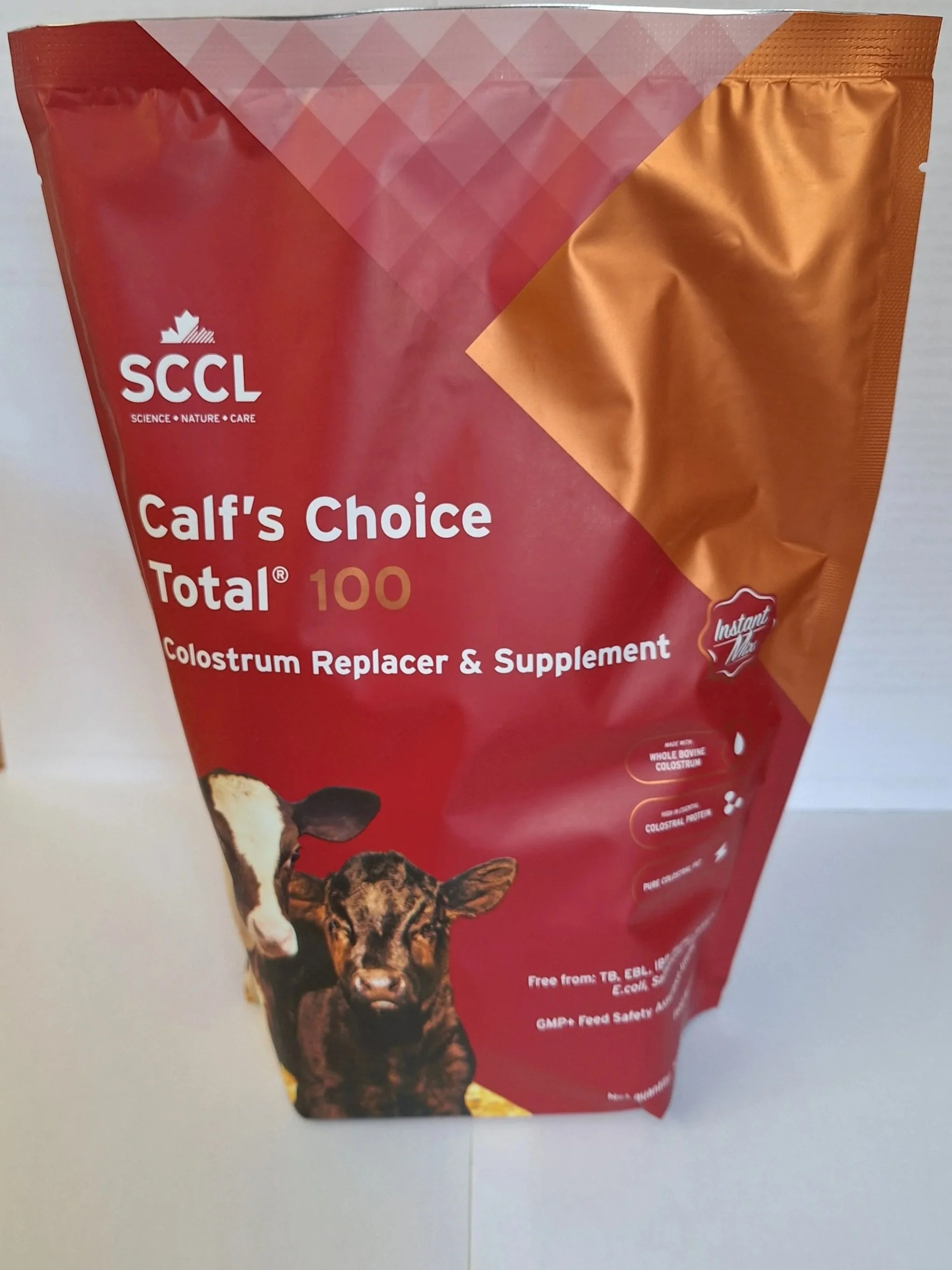
Colostrum Replacer (Lamaid and Calf’s Choice Total)
As all ruminants are born with minimal to no natural immunity (i.e. antibodies) they are hugely reliant on a sufficient Quantity of good Quality colostrum, Quickly after birth to provide protection from infections. Good quality colostrum relies on the mother having a good udder and being in good condition herself so that she has plenty of colostrum ready to feed the offspring immediately when she gives birth. But what do we do when good quality colostrum isn’t available? Below is a diagram showing the cascade in order of preference for colostrum sources.

Diagram above: Best colostrum source left, decreasing quality to the right
Consider disease status of dams (eg Johnes) when sharing colostrum, selecting those to freeze. Good quality colostrum should give 5g of IgG per 100ml of feed, anything less than 3g of IgG per 100ml runs the risk of failure of passive transfer (inadequate levels of antibodies to provide protection against regular diseases). At the practice we stock two brands of powdered colostrum: Vet Plus – Lamaid and SCCL – Calf’s Choice Total. The Lamaid comes in single sachets and was assessed in a 2020 study. It gave just over 3g per 100ml, performing better than a lot of competitors products. However, note that this is just over the cut off for failure of passive transfer, highlighting these products are not to be used as a replacement but as a supplement.
The Calf’s Choice option was tested by Russell at a previous practice and consistently gives 5g of IgG per 100ml of feed. It comes in single large pouches that mix a 2 litre feed. It can be used in lambs and we would suggest making up the sachet (2 litres) and freezing in 100ml feeds (look at Amazon for large ice cube trays!).
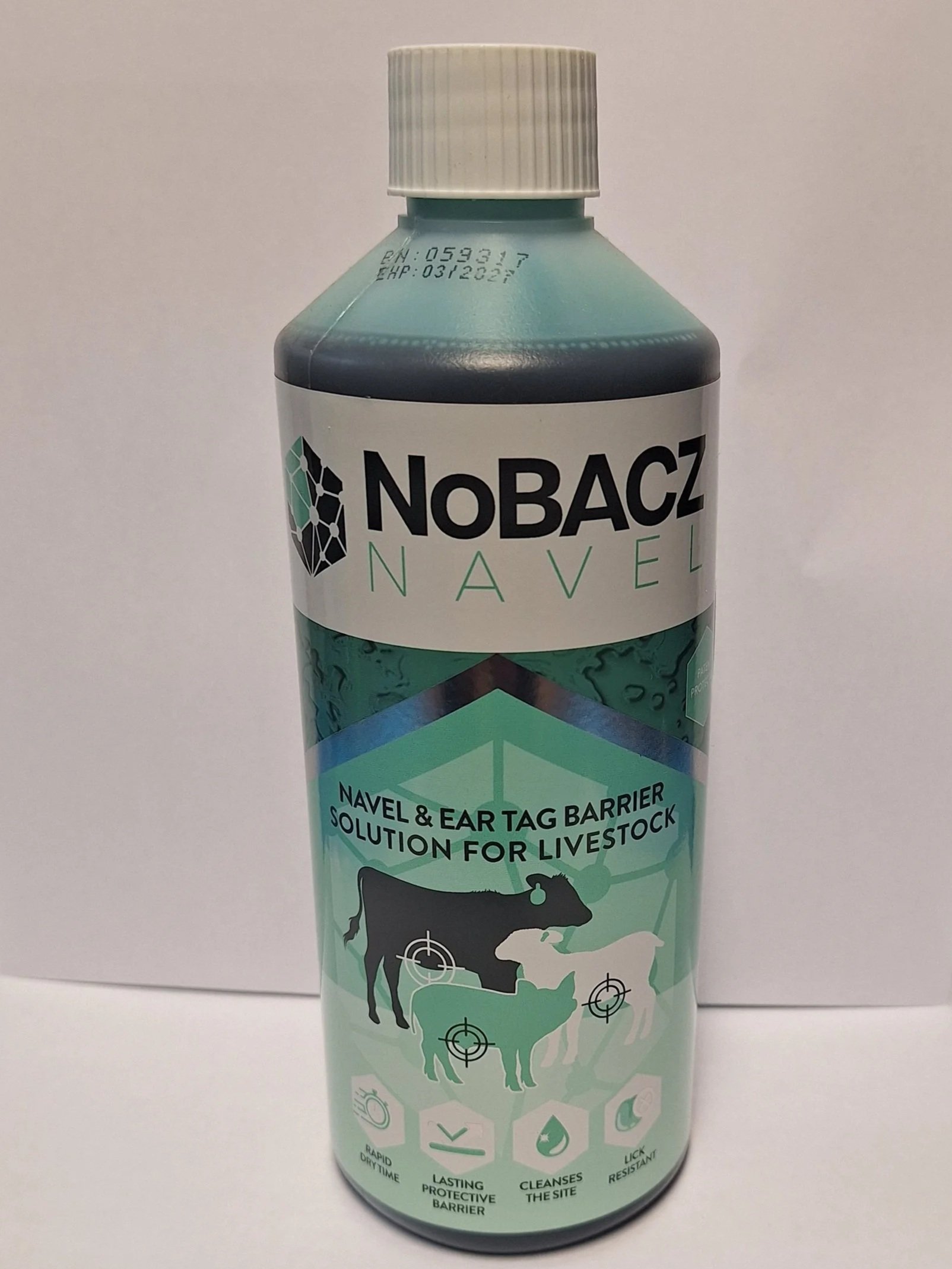
NoBACZ – Navel, Ambugreen and Cattle
The NoBACZ brand originates from Cambridge and conducts clinical trials on its products before releasing them for sale. It’s technology forms a waterproof barrier that protects a wound/navel from bacterial ingress and the environment, promoting natural healing. The navel treatment dries quickly, desiccating the navel in as little as 2 hours while also containing a bitter agent to prevent the mum from licking/removing it. It does not contain antibiotics and breaks down naturally in the environment over time. A 2024 study compared the NoBACZ Navel to strong iodine for treating lamb’s navels after birth. The NoBACZ Navel was shown to reduce lamb mortality by 21% versus iodine meaning that 18 more lambs per 1000 born will survive. The study also demonstrated improved 8 week weights in live lambs versus the iodine treated group. The Ambugreen and Cattle products have been used for treatment of digital dermatitis, udder cleft dermatitis, orf and general wounds. I recently used the Ambugreen in a goose!
PepUp
PepUp is a twin lamb drench we make in house. It contains calcium and propylene glycol (energy) both in sufficient quantities to treat hypocalcaemia and ketosis (Twin Lamb Disease) in ewes. Both ketosis and hypocalcaemia are significant metabolic diseases, commonly affecting ewes in late gestation. They can cause both ewe and lamb losses. Clinically both metabolic diseases have very similar signs so it is impossible to determine which condition a ewe is suffering from without a blood sample. In addition, ewes will often suffer from a combination of both at the same time. We decided to make PepUp when Calciject number 6 disappeared off the market, as there was nothing similar available at the time which could treat both hypocalcaemia and ketosis. It comes in 500ml, 2 litre and 5 litre sizes to suit all size flocks and is a great addition to your medicine cupboard.
This month’s author is Tom Searle. Tom has a particular interest in advanced breeding in sheep, providing embryo transfer, AI and ram fertility services.
Please make note of our new email address info@swfv.uk