Hello and welcome to the March Newsletter. Anyone else fed up with the wet weather??!! We have had a few more promising days at the end of February – hopefully a glimpse into the near future.
This month, we are starting a new partnership with the University of Bristol Vet School – we are now part of the final year teaching rotation. This has been quite a journey – you are used to us having a student now and then but this is a step up for us with more formal teaching and assessments. We have had to jump through a lot of hoops – health and safety, first aid, practice standards – I could go on. We will be having two students for two weeks at a time – one student typically with a vet at a time. We will be teaching them as we go along, and this may take a little more time – obviously, not chargeable. Please bear with us, we are hoping that this will be a win-win exercise.
I have been asked a lot recently about Bluetongue and about the vaccination. The drug company that makes Bultavo, has recently announced that the revaccination gap is 12 months, meaning that if you vaccinated last year, you will only need a single injection as a booster this year (provided it inside the 12 months). Surveillance carried out over the winter has shown exposure to the disease just over the Bristol channel in Devon. Over wintering can occur in midges or when an unborn calf is infected in utero. I cannot tell you if Bluetongue is going to be an issue in 2026, it is not known. Whether you decide to vaccinate or not probably has a lot to do with your level of risk aversion, value of your stock and your farming type. One thing I would say is that vaccinating cattle at a TB test, or when stock are housed/to hand is another factor worth considering.
Different approaches to worming
Whether it’s at the FAWL review or in relation to a group of animals not doing, sheep worming conversations crop up all the time at the practice. With the economic cost of infection in the UK estimated to be between £4.50-£8.70 per sheep and a reduction in productivity of 8.5% per animal, it’s easy to see why.
Anthelmintics (wormers) have been relied upon for decades to control worms - they are the only treatment option available. Traditionally animals were wormed at regular intervals to suppress the worm population. More recently strategies targeting times considered to be high risk, such as around lambing (peri-parturient period) or weaning have been utilised, however these still involved treating all the animals in a group.
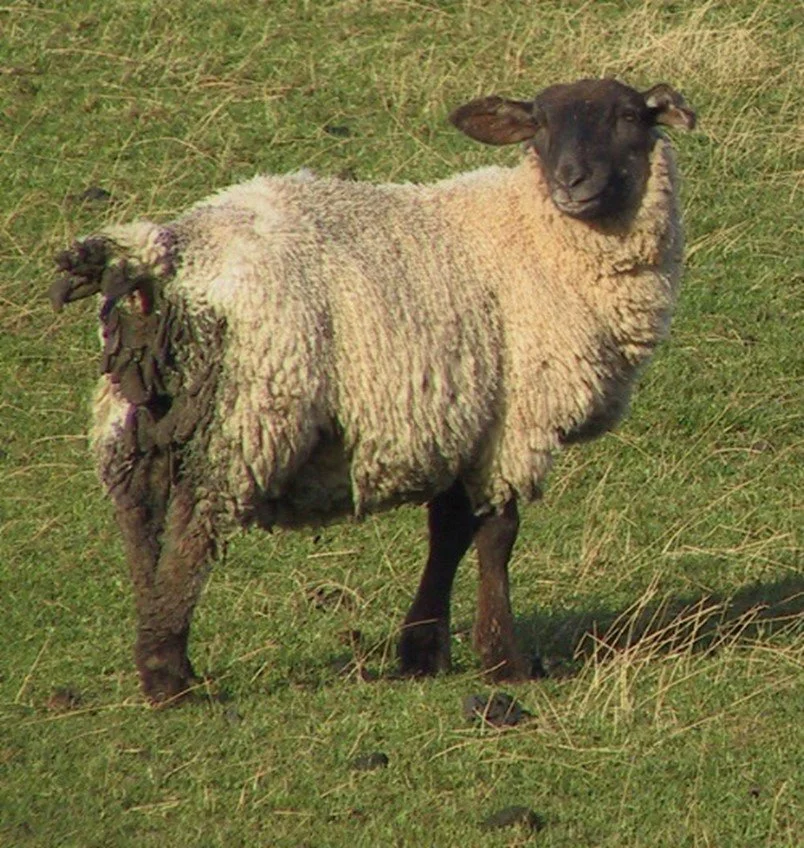
Scouring lamb: Image courtesy of NADIS
In recent years, at the practice we’ve seen an increase in problems where worming treatments have failed due to the worms having developed resistance to the drugs used. This means we are looking for new strategies to prolong the effectiveness of the wormers that currently work, without compromising health and production. The aim of these strategies is to leave a population of worms unexposed to the wormer and therefore not under selection for resistance.
Targeted Selective Treatment (TST) aims to assess individual animals rather than the flock to determine treatment need. Parameters used include body condition score (BCS), daily weight gain (DWG), faecal egg count (FEC), FAMACHA (a scale to assess pallor, an indicator of Haemonchus infection) and milk production, either singularly or in combination.
Recently, a large-scale study looked at the impact of using TST and the findings are interesting:
· FEC was not affected by using TST, this means that pasture contamination is not increased compared to other treatment strategies. Previously people have advocated blanket treating ewes in the peri-parturient period to limit pasture contamination for their crop of lambs, however this study shows that leaving some ewes untreated (e.g. fit, healthy, adult ewes) is not detrimental to pasture contamination.
· Anthelmintic use was significantly reduced, by around half, in TST groups. Interestingly female only groups required less treatment than mixed sex groups. It is recognised that males have lower resistance and potentially lower resilience (ability to cope with infection) to worms. Potentially separating lambs after weaning into male and female fattening groups could also see a reduction in worming treatments needed for the females.
· Overall, the results suggested that TST does not have a significant impact on animal performance compared to other strategies. However, they did find that using BCS alone as a means of determining treatment requirement did reduce performance. There are a few possible reasons for this. BCS is a subjective measure, meaning there is variation between scorers. It is difficult to detect small differences, so that by the time a poorer score is noted there has already been an impact on growth.
Some farms are already using TST successfully. If you are interested and would like discuss TST further then chat to this month’s author Sian, or one of the other vets next time you see us.

Meetings
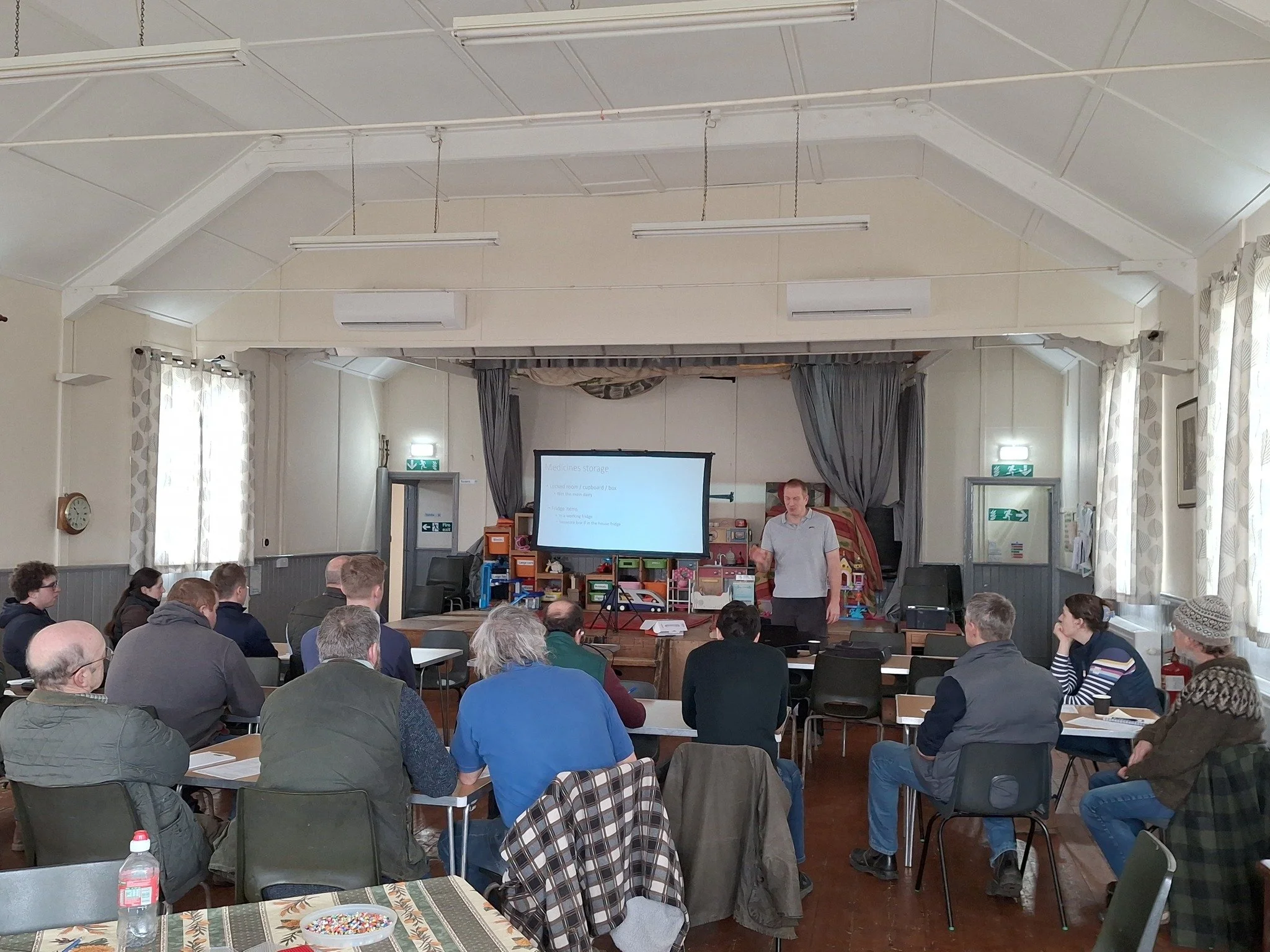
In February we held some meetings. Russell and Sian held a medicine meeting in Pendoylan Village Hall, thank you to everyone who came-we hope you enjoyed it.
Tom also ran his hugely popular Lambing Course again, this year at Colliers Adventure Farm. As always, the feedback was fantastic. Well done Tom and thank you to those who came. We’ve had a couple of enquiries since the course, we’re unable to run another one this year but please watch out on Facebook and our Newsletters early next year.
Once lambing quietens down, we will be looking at running further courses, some specifically aimed at the Animal Health Improvement Cycle (AHIC), the veterinary component to the Sustainable Farming Scheme (SFS). If you are intending to sign up to the SFS and would like more information about what’s involved from the veterinary side of things, then these meetings will be ideal for you. We’ll update you when we have dates and locations. In the meantime, we have started a list of clients registered for the SFS, so let the office know and we can add you.
Please make note of our new email address info@swfv.uk